


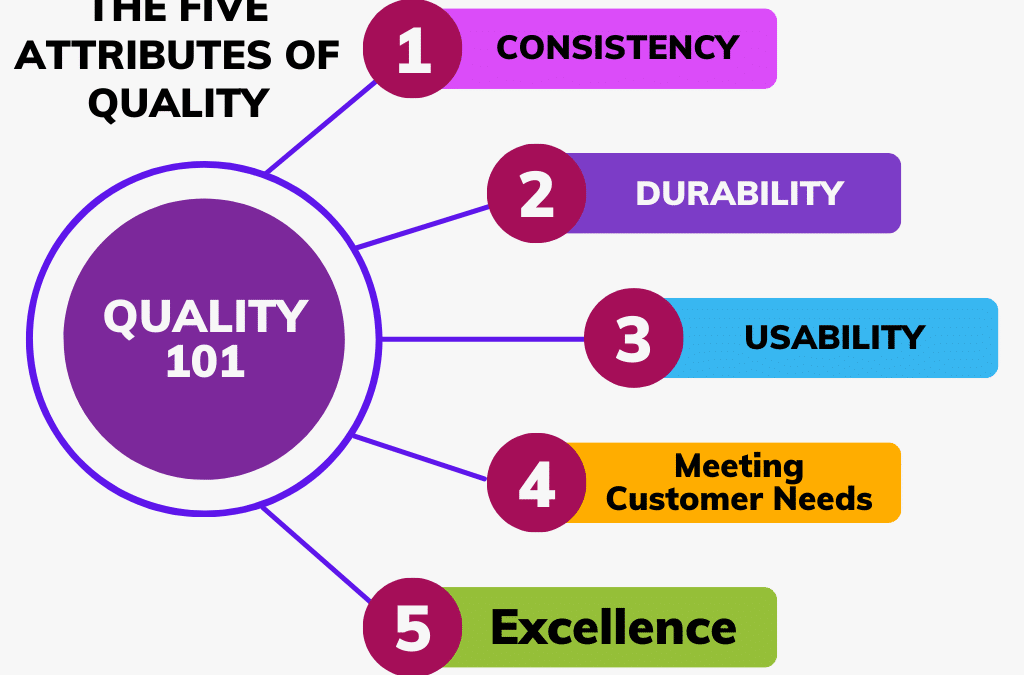
The Five Attributes of Quality: A Guide Inspired by W. Edwards Deming.
In an era where consumers are bombarded with endless choices, the quest for quality has never been more critical. Amidst the noise, quality is the clarion call that can distinguish a brand, build enduring trust, and foster unwavering customer loyalty. Yet, understanding and achieving quality is an art and science unto itself, one that requires insight, dedication, and a deep understanding of what truly matters to both the business and its customers. It’s here that the wisdom of W. Edwards Deming, a titan in the field of quality management, offers timeless guidance.
Deming’s work revolutionised how we think about quality, shifting the focus from mere inspection to embedding quality into every facet of the business process. He argued that quality shouldn’t be an afterthought or a final check but a fundamental principle guiding every action and decision within an organisation. This philosophy underscores the importance of seeing quality not as a singular aspect but as a composite of several attributes, each contributing to the overall excellence of a product or service.
Understanding these attributes is not just beneficial; it’s essential for any entrepreneur, business leader, or organisation aspiring to make a mark in their industry. It’s about laying a foundation on which customer satisfaction, operational efficiency, and competitive advantage can be built. As we delve into the five key attributes of quality inspired by Deming’s work, remember that this exploration is more than academic—it’s a roadmap for cultivating a culture of excellence that can stand the test of time in a rapidly evolving marketplace.
Attribute No.1: Consistency: The Heartbeat of Quality
Consistency, as championed by W. Edwards Deming, is pivotal in the realm of quality management. It’s the assurance that customers receive the same high-quality product or service every time they engage with your business. This reliability forms the cornerstone of trust and loyalty, which are invaluable in today’s competitive market. But achieving consistency is no small feat; it requires meticulous attention to detail, rigorous standardisation of processes, and a commitment to continuous improvement.
Deming’s philosophy underscores the importance of systematic approaches to quality. He advocated for the use of statistical process control (SPC) as a tool to understand and reduce variability in manufacturing processes. However, consistency extends beyond the factory floor; it permeates every aspect of an organisation. From customer service to the user experience, every touchpoint with the customer must reflect the same level of quality and commitment.
To embody this attribute, businesses must invest in training their teams, refining their operations, and regularly evaluating their performance against established standards. It’s about creating a culture where quality is everyone’s responsibility, and where each organisation member is empowered and equipped to maintain the high standards set forth.
Furthermore, consistency in quality also means being responsive to feedback and willing to adapt. While maintaining high standards, businesses must also be agile, and able to adjust their processes and products as customer needs and market conditions evolve. This dynamic approach to consistency ensures that quality remains not just static adherence to specifications, but a living, breathing aspect of the brand that grows and improves over time.
A prime example of consistency in action is McDonald’s, the global fast-food giant. McDonald’s has mastered the art of delivering the same taste, service, and experience across thousands of locations worldwide. Whether you’re ordering a Big Mac in New York or Tokyo, you can expect the same flavour and quality. This level of consistency is achieved through standardized procedures, rigorous training of staff, and strict quality control measures that ensure every ingredient and process meets the company’s high standards. McDonald’s dedication to consistency not only builds customer trust but also cements its position as a leader in the fast-food industry.
Attribute No.2: Durability, Quality That Lasts
Durability is an essential attribute of quality that signifies how well a product or service endures over time, maintaining its functionality, appearance, and reliability without requiring excessive maintenance or repair. This attribute speaks volumes about the craftsmanship, materials, and thoughtfulness that go into the creation of a product or the delivery of a service. In a world where disposable culture has become prevalent, durability stands out as a hallmark of quality and sustainability, reflecting a brand’s commitment to offering lasting value to its customers.
For businesses, prioritising durability means investing in high-quality materials and robust design principles that can withstand wear and tear. It involves thorough testing and refinement to ensure products can endure the rigours of everyday use. For services, durability translates into the reliability and consistency of the experience provided over time. This can be achieved through continuous training of staff, maintaining high standards, and adapting to changing customer needs without compromising service quality.
Moreover, durability has a direct impact on consumer perception and brand reputation. Products and services that last not only fulfil the promise of quality but also convey a message of respect for the customer’s investment. This builds trust and fosters loyalty, as customers are more likely to return to a brand that delivers enduring value. Additionally, by reducing the need for frequent replacements or repairs, durable products contribute to sustainability, appealing to the growing segment of environmentally conscious consumers.
In essence, durability in quality is not just about the longevity of a product or service but about building a lasting relationship with customers based on trust, reliability, and shared values. It’s an investment in the future, ensuring that a brand’s offerings continue to satisfy and delight customers long after the initial purchase.
A prime example of a company that exemplifies durability is Toyota. Known for its relentless commitment to quality, Toyota has established a reputation for producing vehicles that are not only reliable but also endure the test of time. This enduring quality is rooted in the Toyota Production System (TPS), which emphasises efficiency, innovation, and especially, a continuous commitment to improving product durability. Toyota’s approach to manufacturing focuses on meticulous design, rigorous testing, and constant feedback loops that ensure each vehicle meets high standards of durability.
Customers of Toyota often tout the longevity of their vehicles, with many models clocking hundreds of thousands of miles with minimal issues. This durability extends beyond just the engines and transmissions to include the vehicle’s bodywork and interiors, which are designed to resist wear and maintain appearance over time. Toyota’s focus on durability has not only earned it a loyal customer base but has also set it apart in the automotive industry as a brand synonymous with quality that lasts. This dedication to building durable vehicles contributes to Toyota’s global success and reinforces its position as a leader in creating sustainable, long-lasting products.
Attribute No.3: Usability: Simplicity in Design and Function
Usability in the context of quality refers to how easily and effectively a product or service can be used by the intended user. This attribute of quality emphasises simplicity in design and function, ensuring that users can achieve their goals with minimal frustration or confusion. Usability is about creating intuitive experiences that accommodate the user’s needs and preferences, making interactions straightforward and satisfying.
For a product or service to be considered usable, it must not only fulfil its intended purpose but do so in a way that is accessible to its audience. This involves thoughtful design processes that take into account the user’s perspective, including clear instructions, logical navigation, and a minimal learning curve. Products with high usability are designed with a deep understanding of the user’s environment, limitations, and objectives, ensuring that features are easily discoverable and functionalities are clear.
Moreover, usability extends to the adaptability of the product or service, allowing for customisation or adjustment to fit individual needs. This can be seen in software applications with customisable interfaces or physical products with adjustable settings.
Focusing on usability demonstrates a commitment to customer satisfaction and accessibility, ultimately leading to increased adoption, lower support costs, and higher user retention. By prioritising simplicity in design and function, businesses can ensure that their offerings not only meet but exceed user expectations, fostering positive experiences and long-term loyalty.
The Apple iPhone stands as a quintessential example of usability in modern technology. Its intuitive interface, characterised by simple, clean lines and an easily navigable operating system, sets a benchmark for user-friendly design. From the moment of unboxing, users can effortlessly navigate through apps and features, thanks to the iPhone’s straightforward layout and responsive touch screen. Apple’s continuous focus on refining the user experience is evident in the iPhone’s consistent updates and features that enhance accessibility, such as VoiceOver and Siri. This commitment to usability ensures that users of all tech-savviness levels can enjoy the iPhone’s capabilities, reinforcing Apple’s reputation for creating products that seamlessly integrate into daily life.
Attribute No.4: Meeting Customer Needs
Meeting customer needs, or relevance, is a critical attribute of quality that ensures products and services not only fulfil but also anticipate the demands and preferences of the target market. This attribute requires a deep understanding of the customer’s challenges, desires, and lifestyle, ensuring that offerings are not just available but are precisely what the customer is seeking.
To truly meet customer needs, businesses must engage in active listening, leveraging tools such as market research, customer feedback, and social media interactions to gain insights into what their audience values most. This process involves not only identifying current needs but also forecasting future trends and preferences, allowing companies to stay one step ahead.
Incorporating this attribute into product or service design means prioritising flexibility and customisation, enabling customers to tailor their experience to fit their specific requirements. It also involves ensuring accessibility, so that solutions are readily available when and where they are needed, and compatibility so that products or services integrate smoothly into customers’ existing ecosystems.
By effectively meeting customer needs, businesses can create a strong emotional connection with their audience, fostering loyalty and advocacy. This not only enhances customer satisfaction but also drives repeat business and referrals, which are invaluable for sustainable growth. Ultimately, the ability to meet and exceed customer expectations is what transforms a good product or service into an indispensable part of the customer’s life or work.
A prime example of a company that excels in meeting customer needs is Amazon. From its inception, Amazon has been deeply focused on customer satisfaction, continually evolving its offerings to address the changing demands of its vast consumer base. This commitment is evident in its vast product selection, user-friendly interface, and innovative services like Amazon Prime, which offers fast, free shipping, streaming entertainment, and more, all tailored to enhance the shopping experience.
Amazon’s ability to meet customer needs also extends to its use of advanced data analytics to personalise recommendations, making it easier for customers to find products they didn’t even know they wanted. Furthermore, its customer service is designed for quick resolution of any issues, emphasising the company’s dedication to customer satisfaction.
The introduction of Alexa and the Echo line of smart speakers further showcases Amazon’s commitment to meeting customer needs by integrating into daily life, offering hands-free convenience and a wide range of services. Amazon’s continuous pursuit of innovation, focused on making life easier and more enjoyable for its customers, exemplifies its foundational strategy of customer obsession, setting a high standard for meeting and anticipating customer needs in the digital age.
Attribute No.5: Excellence, Striving for Perfection
Excellence, or striving for perfection, is the attribute of quality that embodies the relentless pursuit of the highest possible standards in every aspect of a business’s operations, products, and services. This pursuit is not about achieving flawlessness but about constantly pushing the boundaries of what is possible to exceed expectations and deliver unparalleled value to customers. Excellence is a mindset that influences every decision, encouraging continuous improvement, innovation, and attention to detail.
Incorporating excellence into a business ethos means setting ambitious goals and benchmarks that challenge the status quo. It involves empowering employees to take ownership of their work, fostering a culture where feedback is welcomed, and learning from failures is seen as a step towards greater achievements. Businesses that prioritise excellence are committed to quality in every facet, from the initial design and development of a product or service to the after-sales support and customer engagement.
This attribute also requires a deep understanding of the industry and customer base, leveraging insights to refine and enhance offerings continuously. Excellence in quality means never settling for “good enough.” Instead, it’s about an ongoing commitment to excellence that seeks to inspire, innovate, and impress at every opportunity.
By aspiring for excellence, businesses can distinguish themselves in a crowded marketplace, building a reputation for leadership, innovation, and superior quality that attracts and retains customers, drives growth, and establishes a lasting legacy of success.
A notable example of a company that embodies excellence in its business model is Rolex. Known globally for its luxury watches, Rolex’s commitment to excellence is reflected in the precision, craftsmanship, and durability of its products. Each timepiece undergoes rigorous testing to ensure it meets the company’s exacting standards for quality, performance, and aesthetics. Rolex’s dedication to perfection is evident in its use of high-quality materials, innovative design, and meticulous attention to detail. This relentless pursuit of excellence has established Rolex as a symbol of prestige and reliability in the luxury watch industry, making it a preferred choice for those seeking unparalleled craftsmanship and timeless elegance.
Conclusion:
In conclusion, understanding and integrating the five attributes of quality—consistency, durability, usability, meeting customer needs, and excellence—into your business model is not just about enhancing products or services; it’s about building a brand that resonates with reliability, trust, and value in the hearts and minds of consumers. These attributes serve as pillars upon which sustainable business success can be constructed, fostering a culture that prioritises customer satisfaction and continuous improvement.
Adopting these principles requires a commitment from every level of the organisation to not only meet but exceed expectations, ensuring that every customer interaction is an opportunity to demonstrate your dedication to quality. By doing so, businesses can differentiate themselves in competitive markets, cultivate loyal customer bases, and drive long-term growth.
Remember, quality is a journey, not a destination. It requires commitment, leadership, and a willingness to listen and adapt. Let these five attributes guide your path to excellence, just as Deming’s teachings have illuminated the way for countless others.
For those interested in delving deeper into the philosophy of quality management and its practical applications, several resources stand out:
“Out of the Crisis” by W. Edwards Deming – A foundational text on quality management principles and practices.
“The Toyota Way” by Jeffrey K. Liker – Offers insights into the operational excellence and quality management strategies of one of the world’s most successful automobile manufacturers.
“Lean Thinking: Banish Waste and Create Wealth in Your Corporation” by James P. Womack and Daniel T. Jones – Explores the principles of lean manufacturing and their application across various industries.
These resources provide valuable perspectives on the importance of quality and how to embed it into the fabric of an organisation, offering practical advice and strategies for businesses aiming to achieve excellence in all they do.


